

The Lawsuit That Changed Disability Services in North Dakota
In 1980, The Arc of North Dakota sued the state. The case took 16 years to resolve — and it remade how North Dakota cares for people with intellectual and developmental disabilities.
What was happening at Grafton and San Haven
Residents at these facilities were segregated from their communities, a practice that was considered standard care at the time. In reality, the facilities were chronically understaffed, underfunded, and overcrowded. A 1979 investigation, known as the Taylor Report, documented conditions at both sites. State surveys from 1980 backed it up. At the time the lawsuit was filed, North Dakota spent less per resident than any other state in the country.

The Case
In September 1980, the Association for Retarded Citizens of North Dakota — what we know today as The Arc of North Dakota — filed a class action lawsuit against the state in U.S. District Court, alongside six North Dakotans with intellectual disabilities. The Arc was represented by a private attorney and Legal Services attorneys.
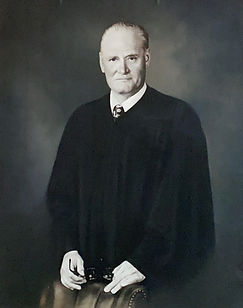
The case went to trial in early 1982 in front of Judge Bruce M. Van Sickle. In August of that year, Van Sickle ruled in favor of The Arc and issued a broad permanent injunction. The court found violations of residents' due process rights, their rights to privacy and free association, and obligations under the Education for All Handicapped Children Act and the Rehabilitation Act of 1973.
The ruling required the state to provide individualized habilitation plans for every resident, appropriate food, shelter, and medical care, and conditions that protected residents' privacy. The Eighth Circuit Court of Appeals affirmed the decision.
That wasn't the end of it. The case stayed open for the next decade and a half, with both sides filing motions through the rest of the 1980s and into the 1990s. A court monitor reported regularly to the judge on the state's compliance. In 1984, Van Sickle's order established the North Dakota Advocacy Program, the predecessor to today's protection and advocacy system. The state pursued an appeal all the way to the U.S. Supreme Court in 1995; the Court declined to hear it. The case was finally closed in 1996.
Case Timeline
1979
-
The Taylor Report documents abuse and neglect at Grafton State School and San Haven State Hospital

1980

-
September 26, 1980: ARC filed its complaint.
-
January 13, 1981: Class certification granted.
1982
-
ovember 4, 1981: Consent decree entered, but the State failed to comply.
-
January 27, 1982: Trial began, lasting 31 intermittent days until May 14, 1982.
-
August 31, 1982: Court ruled in favor of ARC.

1984

-
August 12, 1983: The Eighth Circuit Court affirmed the order.
-
July 11, 1984: The Court outlined P&A’s role, staffing, funding, and clients' rights to access advocates.
1985-1991
-
Ongoing compliance monitoring, motions, and a court-appointed monitor track the state's progress
-
March 19, 1990: The Court ordered:An increase in P&A staff to 21 advocates and 2 monitors.
-
Additional funding for the Project.

1992

-
A Special Master's panel is established to oversee continued implementation
1995
-
The State of North Dakota petitions the U.S. Supreme Court; the Court declines to hear the Case

1996

-
The case is formally closed after 16 years
What it changed
The settlement reshaped how North Dakota cares for people with intellectual and developmental disabilities. It pushed the state away from institutional warehousing and toward community-based services, individualized planning, and the protections that are now baseline expectations rather than something families have to fight for case by case.
People who lived through it remember it directly. At a 2024 event marking the donation of the case records, Michael Lorenz, who was sent to Grafton as a child, said simply that he was glad to get out and didn't like it there.


Preserving the record
In 2024, The Arc of North Dakota donated its court records from the case to the University of North Dakota's Elwyn B. Robinson Department of Special Collections. The collection includes motions, court orders, quarterly compliance reports, correspondence, and press coverage spanning the life of the case. A second donation followed in 2025. Together they form the most complete public record of how the lawsuit unfolded and what it required of the state.
The collection is open for research at UND. We see it as a way to make sure this history — and the people who lived it — aren't forgotten as North Dakota continues building the service system that grew out of this case.